A 2022 survey found that over 88% of adults ages 50 to 80 believed it was important to age in place. And yet, only 10% of U.S. homes currently have the accessibility features needed to support that goal safely. For housing authorities, nonprofits and contractors managing accessibility projects, that gap represents both an urgent need and a significant planning challenge, one that sits at the intersection of legal obligation, limited budgets and the very real physical risks facing the people these programs serve.
ADA compliance, fair housing law and aging in place aren't three separate conversations. For any organization managing residential accessibility upgrades, they are three dimensions of the same problem. And the solutions that work best are the ones that address all three at once.
Understanding ADA Compliance
The Americans with Disabilities Act (ADA), enacted in 1990, is a federal civil rights law prohibiting discrimination against individuals with disabilities. Employers, state and local governments, public businesses, commercial facilities and transportation providers are all subject to ADA compliance requirements, with technical specifications set by the U.S. Access Board's ADA Standards for Accessible Design. Private residences are generally exempt, but those standards remain the highest available benchmark for safe, accessible design in any setting.
For residential housing programs receiving federal funding, American disabilities act compliance applies directly. For private homeowners, ADA accessibility guidelines function as the practical gold standard. This is particularly relevant given that nearly 80% of older adults say they'd need bathroom modifications such as grab bars and walk-in showers to remain safely at home.
What Are the ADA Requirements for Bathrooms?
There are specific and measurable standards to be ADA compliant. Key ADA requirements for bathing areas include:
-
Entry thresholds: Per the U.S. Access Board, shower and bathing entry thresholds are limited to a maximum height of ½ inch, a standard that standard bathtubs, with walls typically standing 14-18 inches high, fail entirely.
-
Grab bars: ADA-compliant grab bars must be installed between 33 and 36 inches above the finished floor, with a minimum diameter of 1.25-2 inches and a load capacity of at least 250 pounds. For bathtubs, grab bars are required on the back wall and the control end wall.
-
Clear floor space: ADA accessibility requirements specify minimum clear floor space beside the tub for wheelchair transfer, typically 60 inches in length alongside the fixture.
-
Controls: Shower and faucet controls must be reachable from outside the tub or shower and mounted no higher than 48 inches above the floor.
The Fair Housing Act and Reasonable Accommodations
What is fair housing as it applies to accessibility? The Fair Housing Act (FHA) requires landlords and housing providers to allow tenants with disabilities to make reasonable accommodation modifications to their units, at the tenant's expense in most private situations. A request to install a tub conversion system is a textbook example. Refusing it without justification is a Fair Housing violation.
For multi-family housing built after 1991, the FHA also mandates seven design and construction requirements, including accessible entry routes, usable doors and ADA accommodations in bathrooms. For housing authorities and nonprofits managing federally funded properties, handicap compliance is a condition of funding. The question is not whether to modify, but how to do it efficiently across multiple units.
Aging in Place Services and Why the Bathroom Is the Starting Point
According to AARP's 2024 Home and Community Preferences Survey, 75% of adults aged 50 and older prefer to stay in their homes as they age. Aging in place is financially rational too; assisted living averages $54,000 annually, while targeted home modifications cost a fraction of that. Aging in place solutions work best when they address the highest-risk areas first, and the bathroom is consistently where that risk concentrates. Age in place services that bypass the bathtub entry point are working around the problem rather than solving it.
For private homeowners, what is ADA compliant in a residential context comes down to practical safety, not legal obligation. Applying ADA accessibility standards (low-threshold entry, grab bars mounted to specification, non-slip surfaces) reduces fall risk meaningfully and creates a bathroom built for the long term.
How Quick Tub Meets ADA Compliance Standards
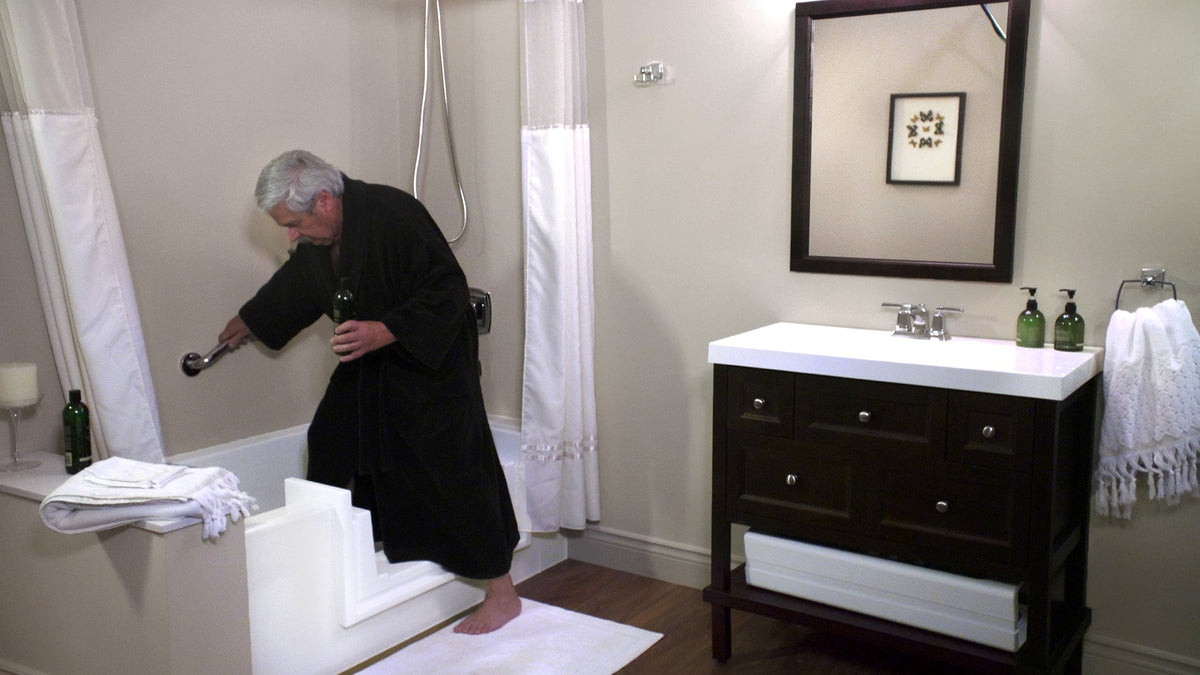
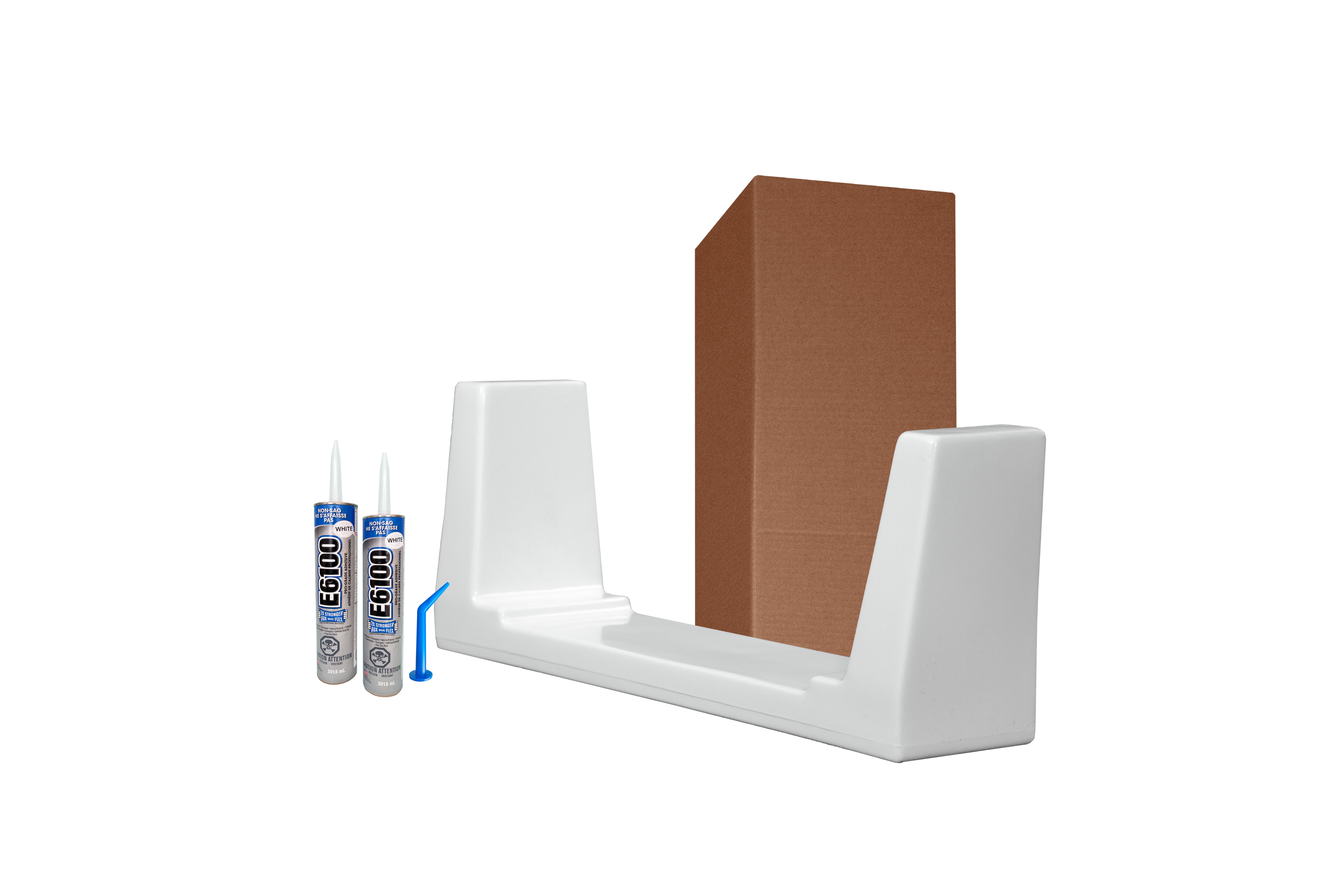
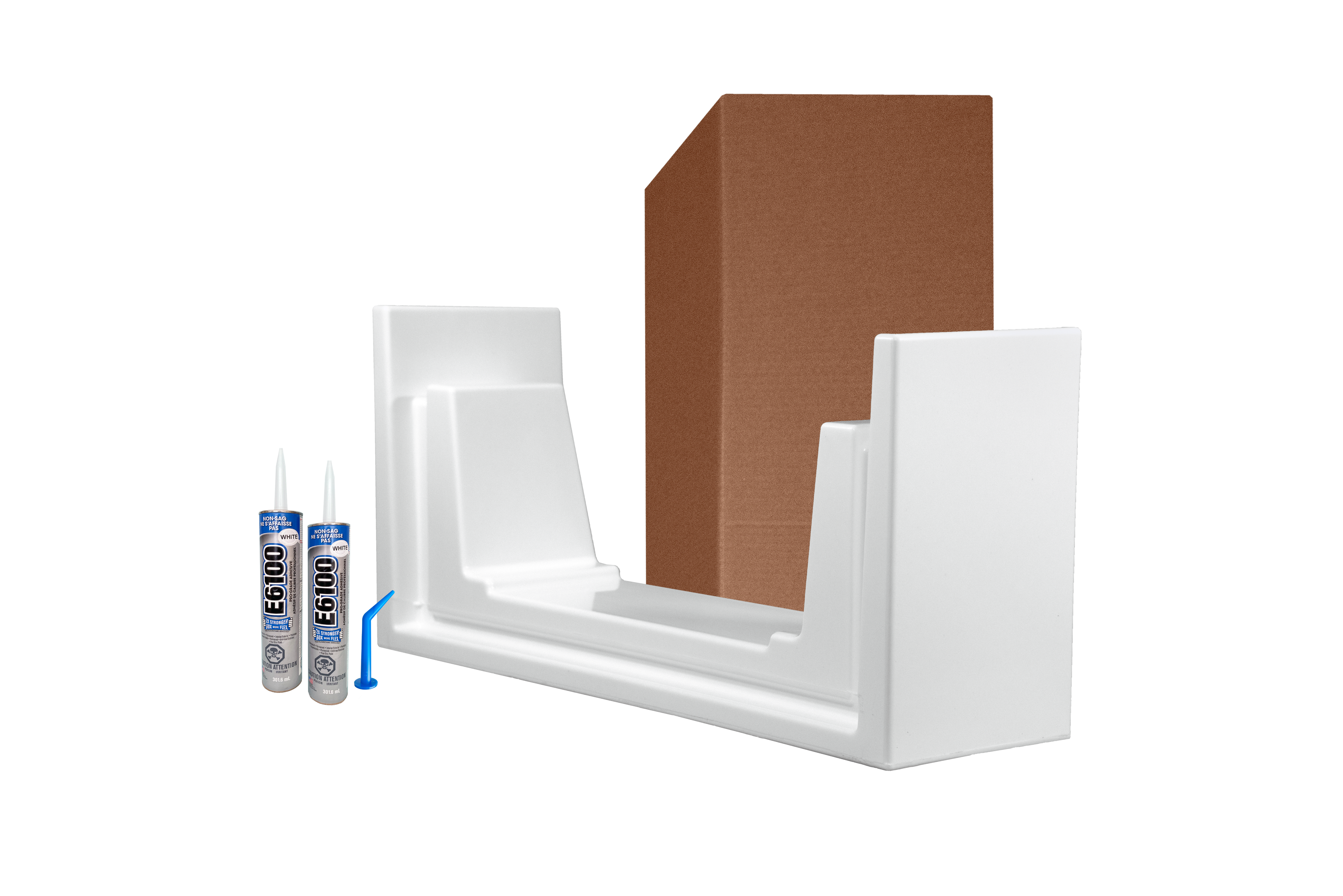
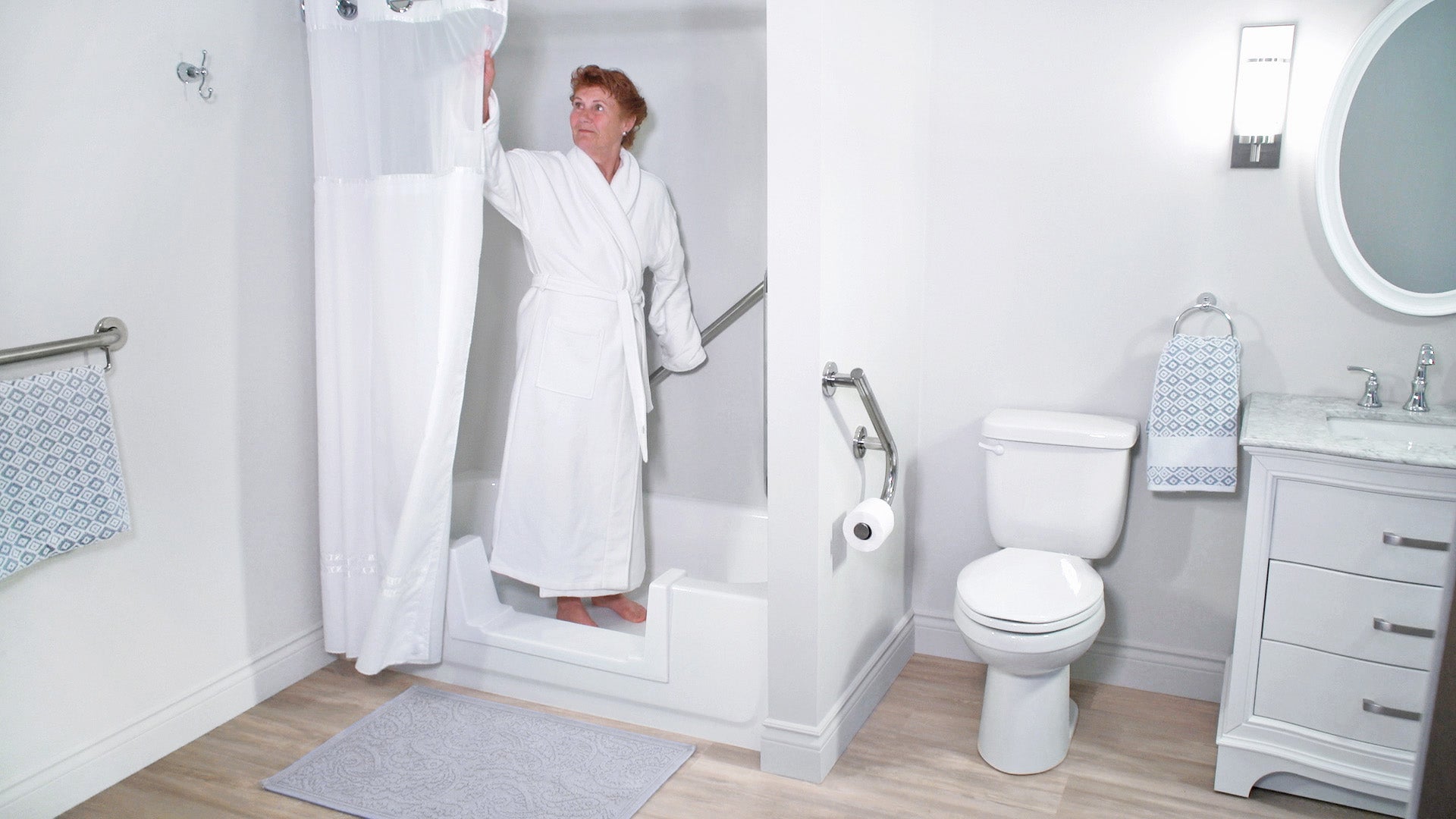
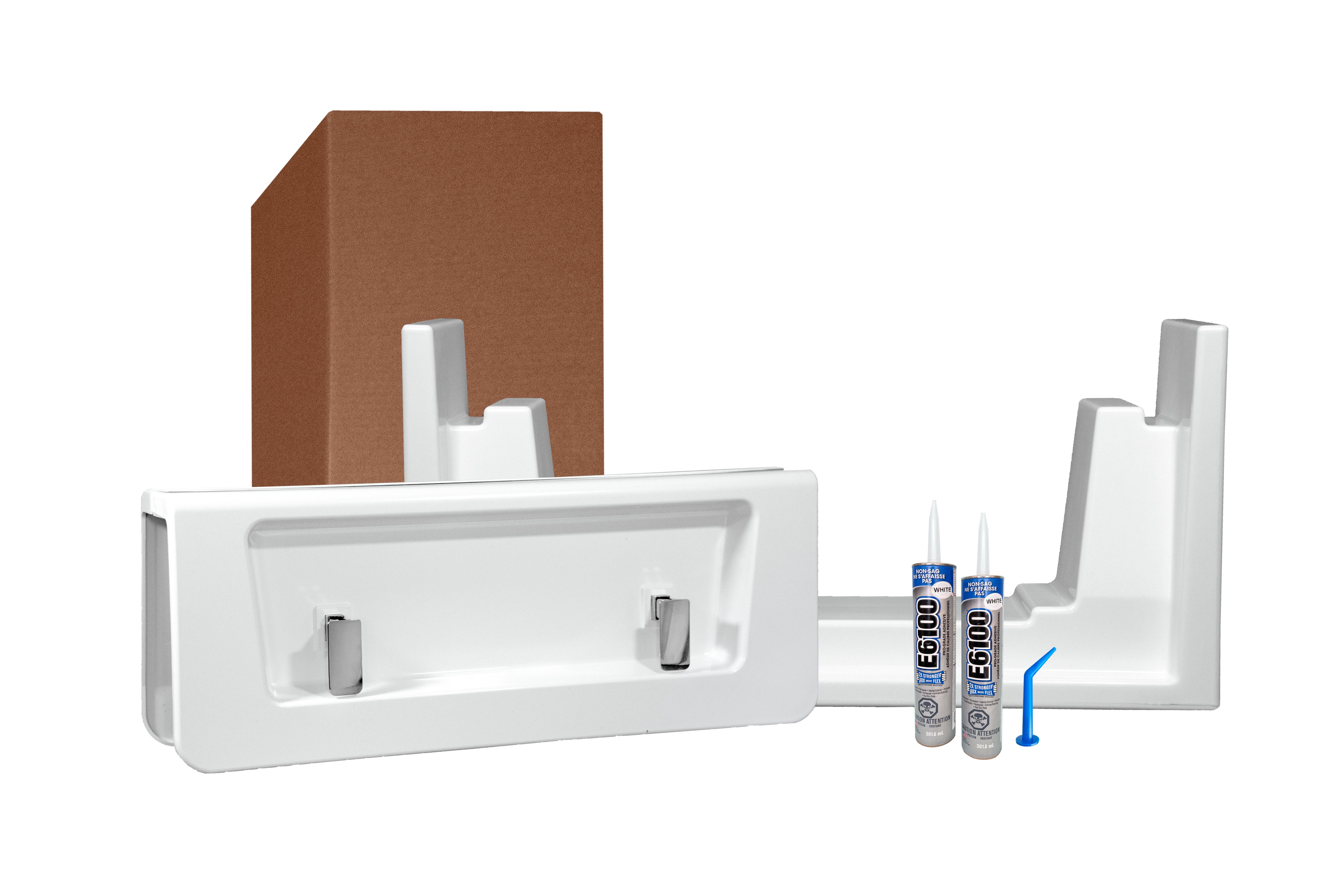
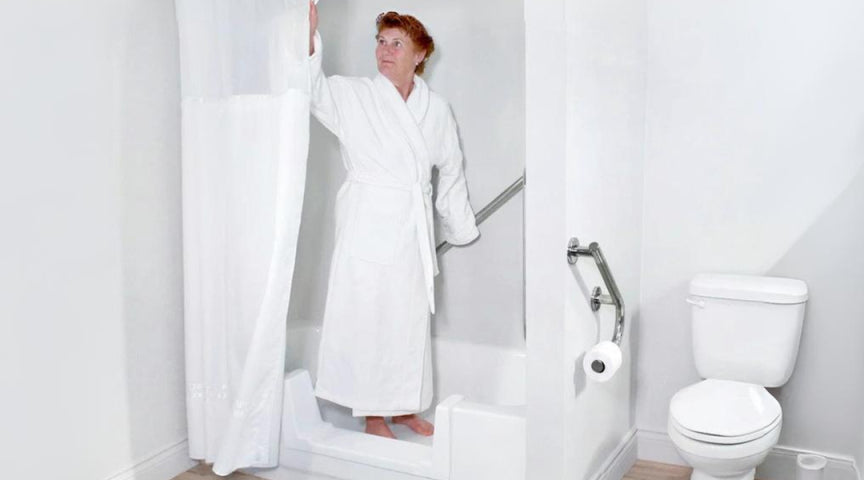
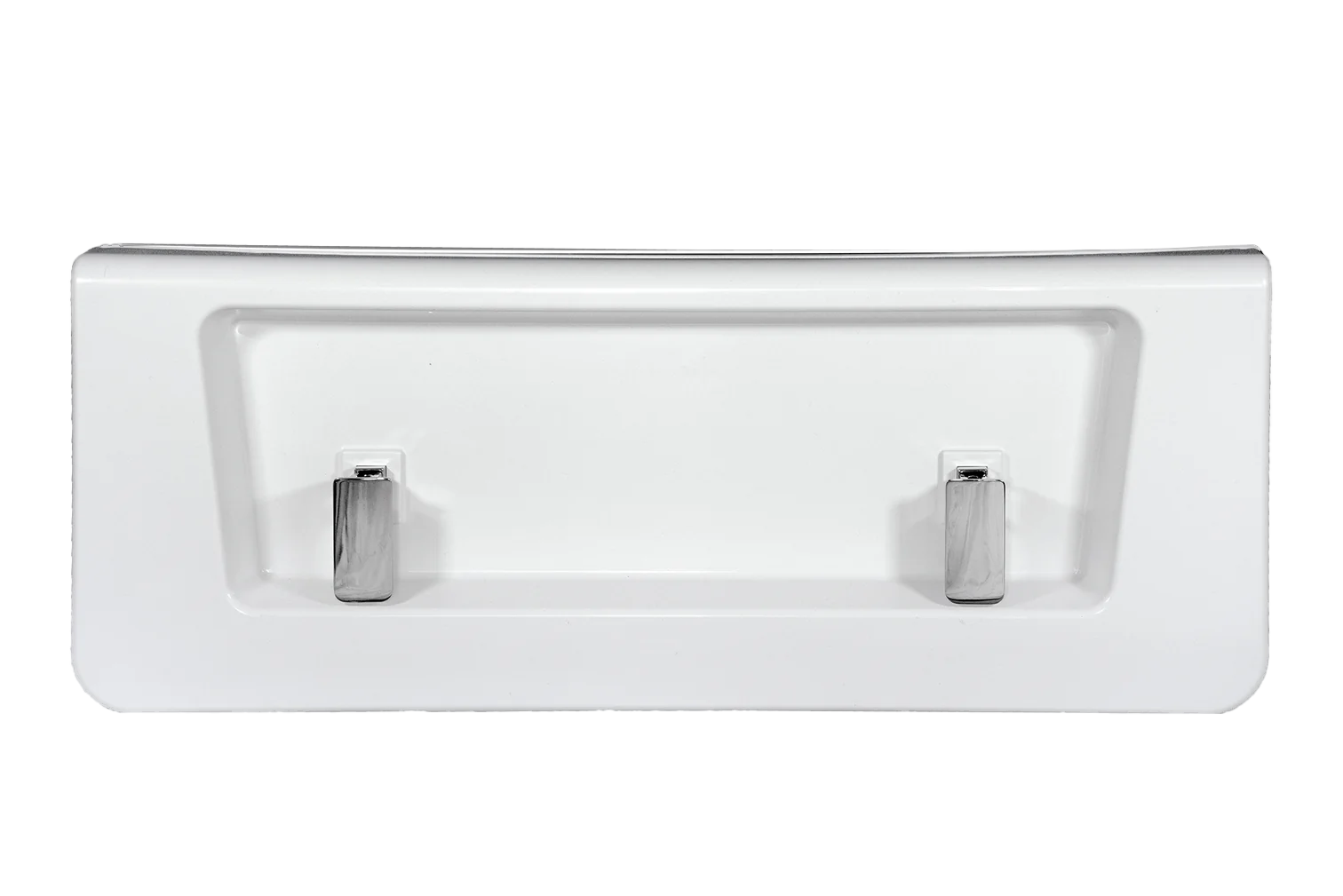
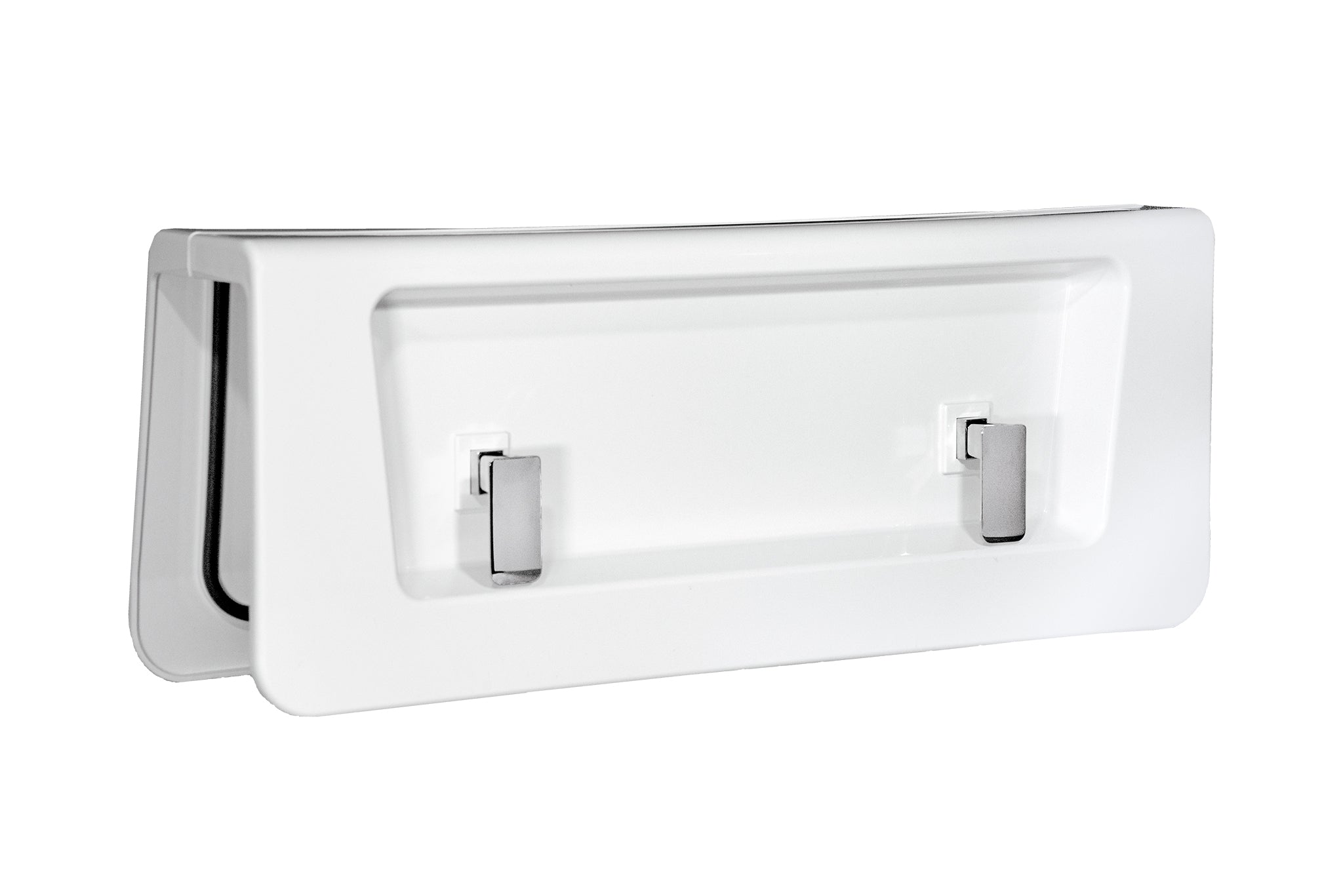
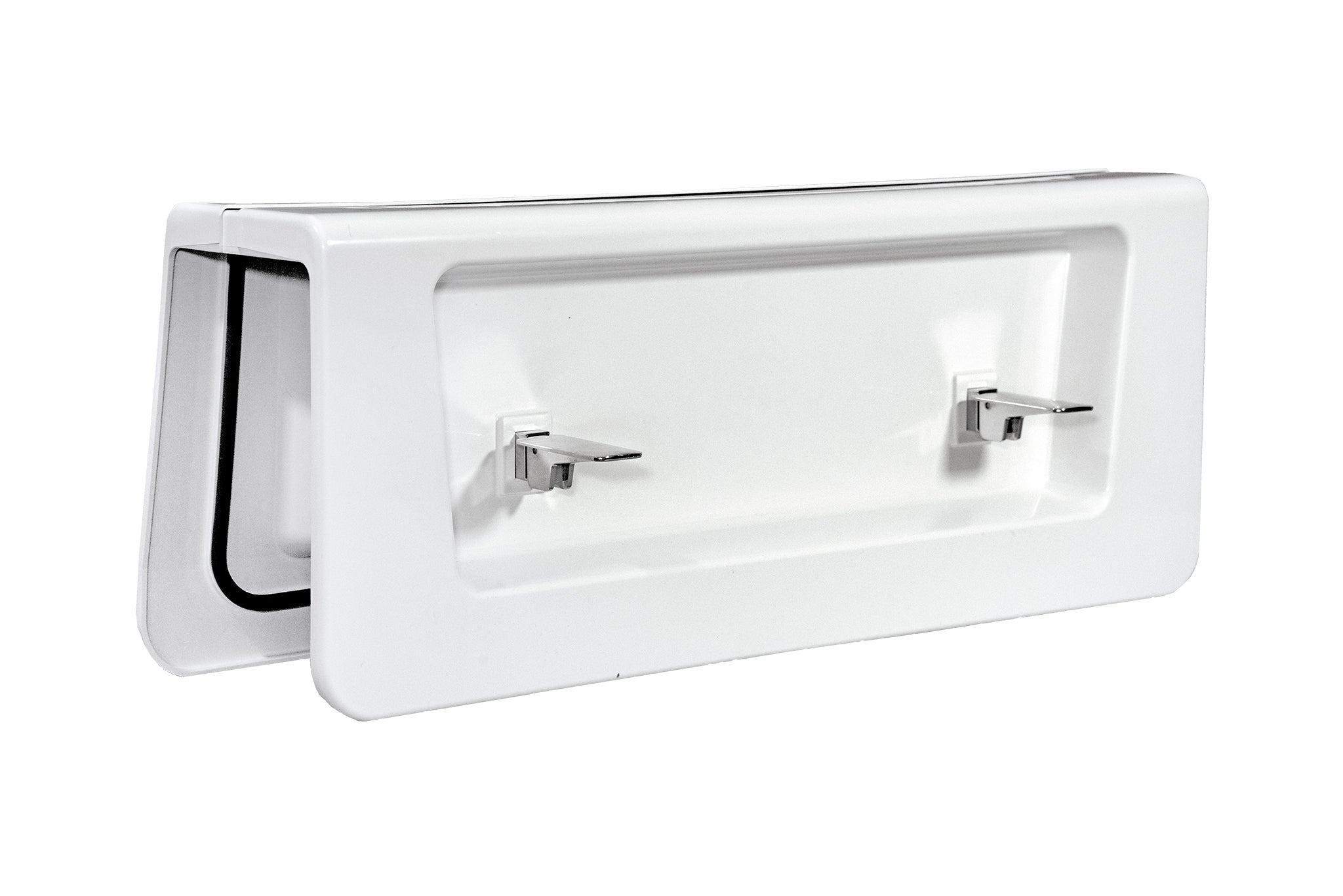
The Quick Tub® Walk-Thru Insert directly addresses the most critical ADA requirement for bathing facilities: threshold height. By cutting a precise opening in the existing tub wall and sealing it with a watertight insert, the system lowers the step-in height by approximately 9-12 inches. This dramatically reduces the entry barrier that causes most bathtub-related falls and brings the entry point far closer to ADA compliant threshold standards.
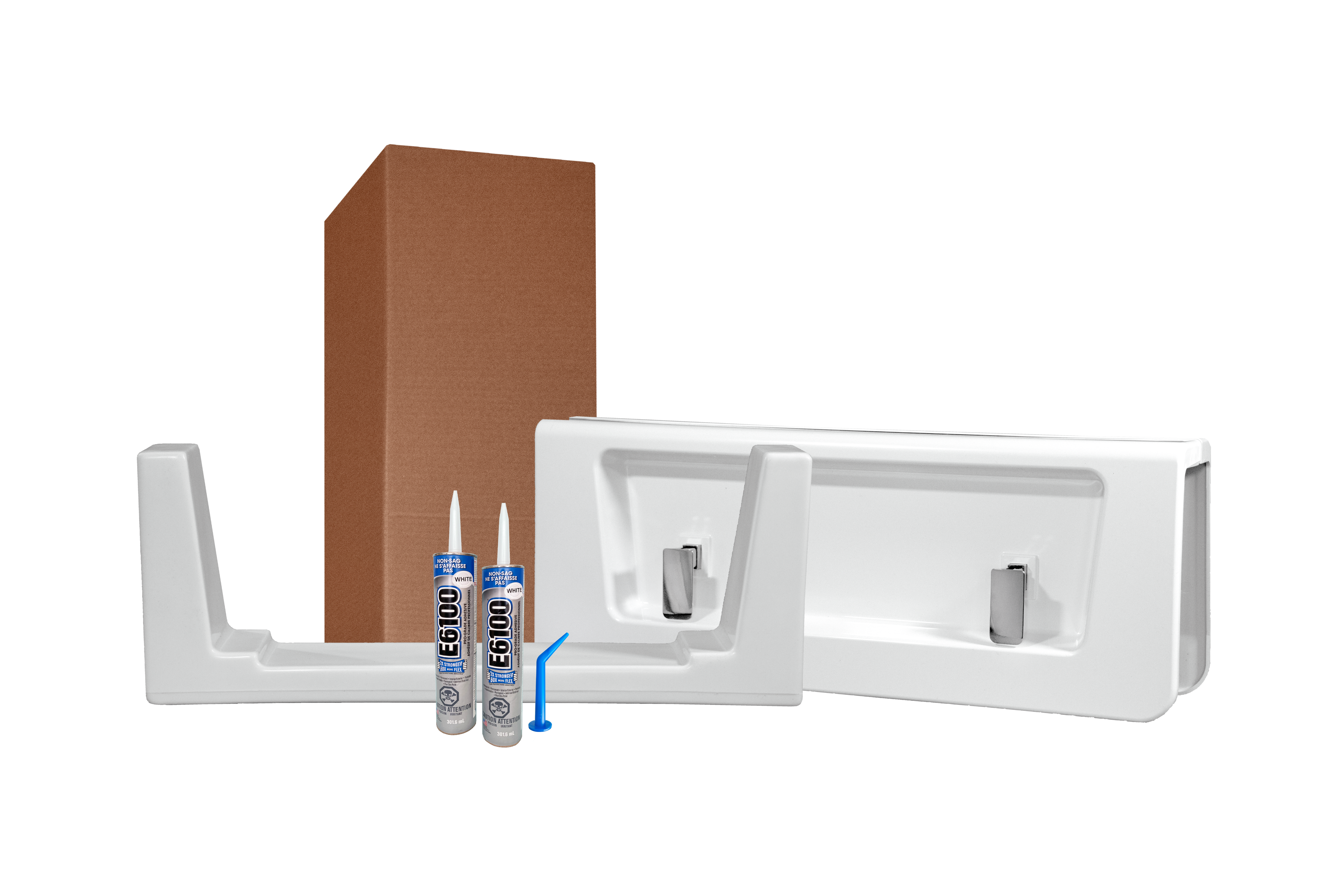
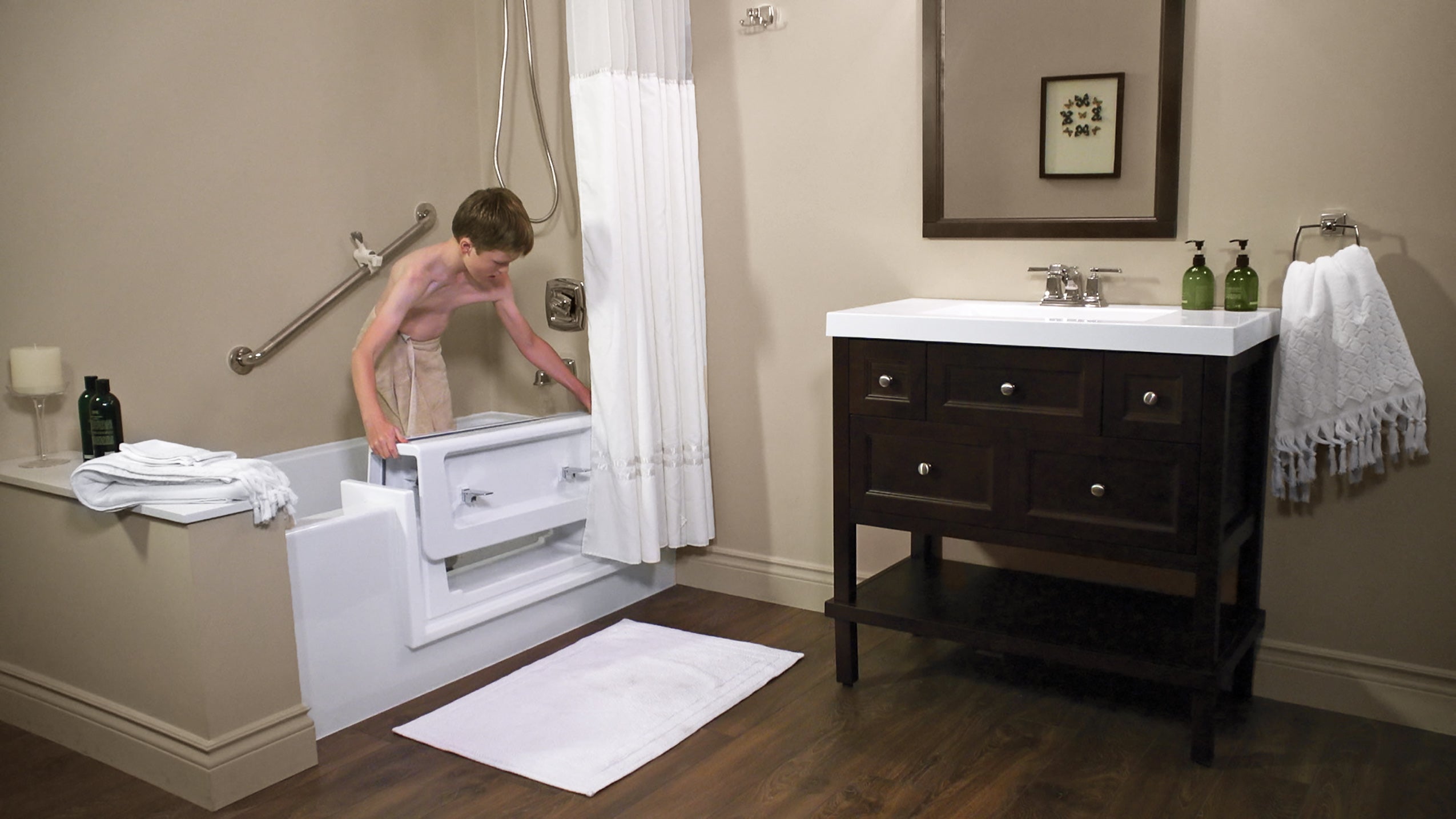
The Quick Tub® Full Convertible Kit adds reversibility. The patented Quick Tub® Cap restores full tub functionality in seconds when needed, making the system appropriate for multi-resident housing where needs change between occupancies.
For home care services for aging in place or organizations managing handicap compliance across multiple units, the cost profile is decisive. A Quick Tub kit starts at $340 and installs in a few hours. Compared to $10,000 or more for a walk-in tub installation or $5,000-$15,000 for a full bathroom remodel.
That means a program with a fixed grant budget can complete 20 to 30 bath modifications for the cost of a single walk-in tub installation. Quick Tub also offers bulk order options for nonprofits and housing programs managing multi-unit projects.
Funding Bathroom Modifications: Grants and Waivers
For families and housing programs asking how to get a free or subsidized walk-in tub or conversion kit for a senior, several established funding pathways exist:
-
Medicaid HCBS Waivers fund home and community-based services, including accessibility modifications for eligible low-income residents. This is often the most accessible route for residential programs.
-
USDA Section 504 Home Repair Program provides grants up to $10,000 for homeowners aged 62 and older for safety and accessibility improvements.
-
VA HISA Grants (Home Improvements and Structural Alterations) fund bathroom and accessibility modifications for eligible veterans.
-
Nonprofit assistance through organizations like Habitat for Humanity and Rebuilding Together can supplement or replace grant funding for qualifying households.
Original Medicare does not cover home modifications. Some Medicare Advantage (Part C) plans include limited home safety allowances; eligibility varies by plan and should be confirmed directly.
Because Quick Tub's cost is substantially lower than alternative solutions, grant funds stretch further, allowing programs to serve more residents with the same pool of money and meet ADA compliance objectives across a broader footprint.
FAQs - Frequently Asked Questions
What are ADA compliance standards?
ADA compliance standards are technical specifications administered by the U.S. Access Board, ensuring spaces are accessible to people with disabilities. In bathrooms, key standards include shower entry thresholds no higher than ½ inch, grab bars mounted 33-36 inches above the floor (with a 250-pound load capacity) and minimum clear floor space for wheelchair transfer. For federally funded housing programs, meeting these standards is a condition of funding.
How do you ensure compliance with fair housing laws?
Start by responding appropriately to reasonable accommodation requests, allowing modifications like tub conversions or grab bar installation without unnecessary barriers. For federally funded properties and multi-unit housing built after 1991, accessible bathroom configurations are a legal requirement. The Fair Housing Act's seven design and construction requirements are non-negotiable, not optional upgrades.
How much does aging in place cost?
Targeted modifications like a Quick Tub conversion start at $340. Broader aging in place solutions covering grab bars, non-slip surfaces and threshold modifications typically run a few thousand dollars. The national average for an aging-in-place remodel is approximately $9,500, a fraction of assisted living's average annual cost of $54,000.

Share:
How Quick Tub Simplifies Bathroom Safety Projects
A Guide for Veterans Service Organizations: Bathroom Accessibility Benefits Worth Knowing About